
Reorganizing Adult Fiction in a Historic Space: How Woburn Public Library Used LibraryIQ to Improve Access and Align with Demand
THE CHALLENGE

Woburn Public Library’s (WPL) Adult Fiction collection lived in the historic wing of the building — beautiful, but never designed for a modern collection. Shelving alcoves were inconsistently spaced and titles sat too high or too low for patrons to reach. Mystery, Romance, and Science Fiction/Fantasy were split across multiple locations instead of having dedicated sections.
WPL staff knew changes needed to be made. The hard part was making changes without guesswork — knowing what to weed, what to replace, and whether everything would actually fit once the shift was done.
THE SOLUTION
WPL staff used LibraryIQ at every stage - from the first weeding decision to the day they physically moved the collection.
BUILDING THE CASE FOR WEEDING
The first task was weeding across Fiction, Mystery, Romance, and Science Fiction/Fantasy. WPL staff used LibraryIQ’s Report Builder and built-in weeding lists to identify titles that hadn’t circulated in three to five years, surface worn copies, and flag duplicates.
Having data behind each decision helped when staff had concerns about the scope of weeding. Conversations were grounded in what the data actually showed rather than judgment calls.
PLANNING THE PHYSICAL SHIFT
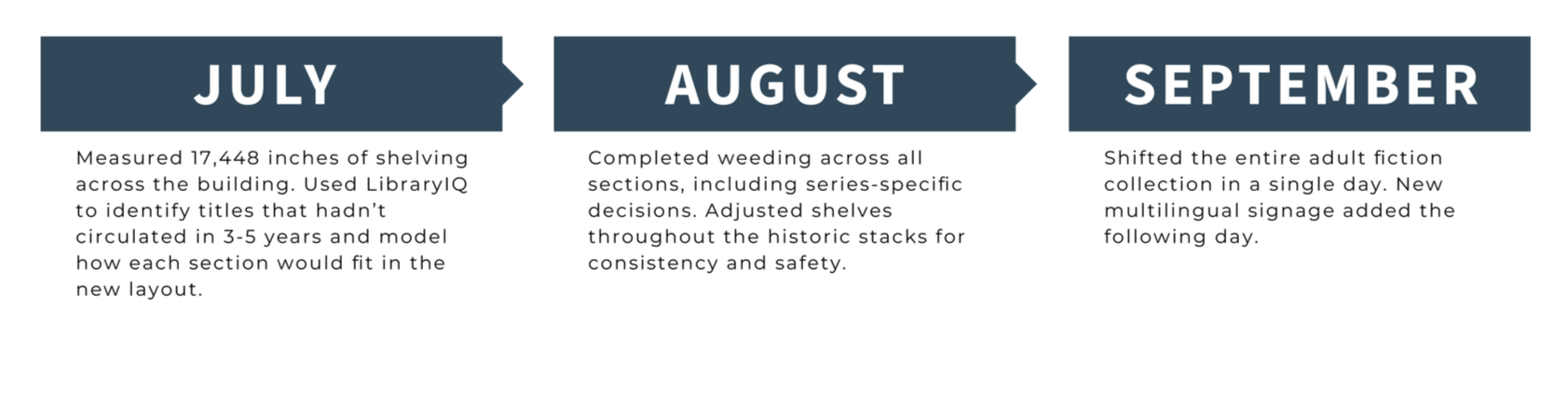
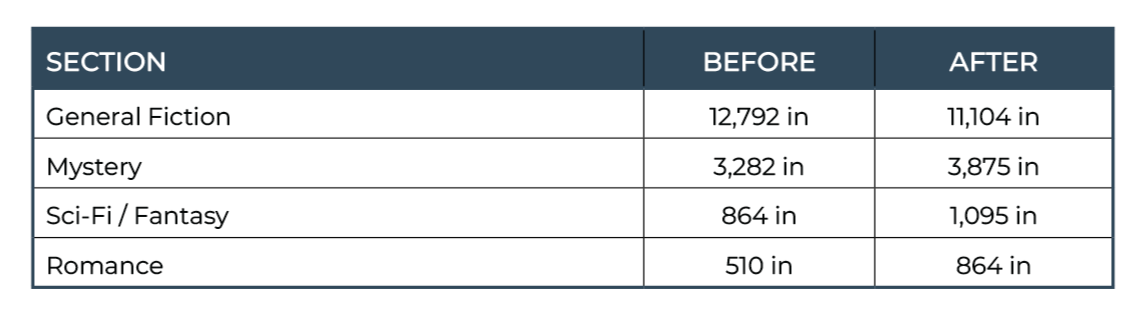
Before moving a single item, WPL staff measured all 17,448 inches of shelving across the historic building and used LibraryIQ’s Shelving Allocation tool to model how the reorganized collection would fit — section by section. LibraryIQ gave the team specific targets to hit during weeding and confirmed that the physical shift would work.
WPL staff shifted the entire Adult Fiction collection in a single day and everything fit where it was supposed to go.
BY THE NUMBERS
Shelf allocation targets informed by LibraryIQ:
THE RESULTS
FOR PATRONS
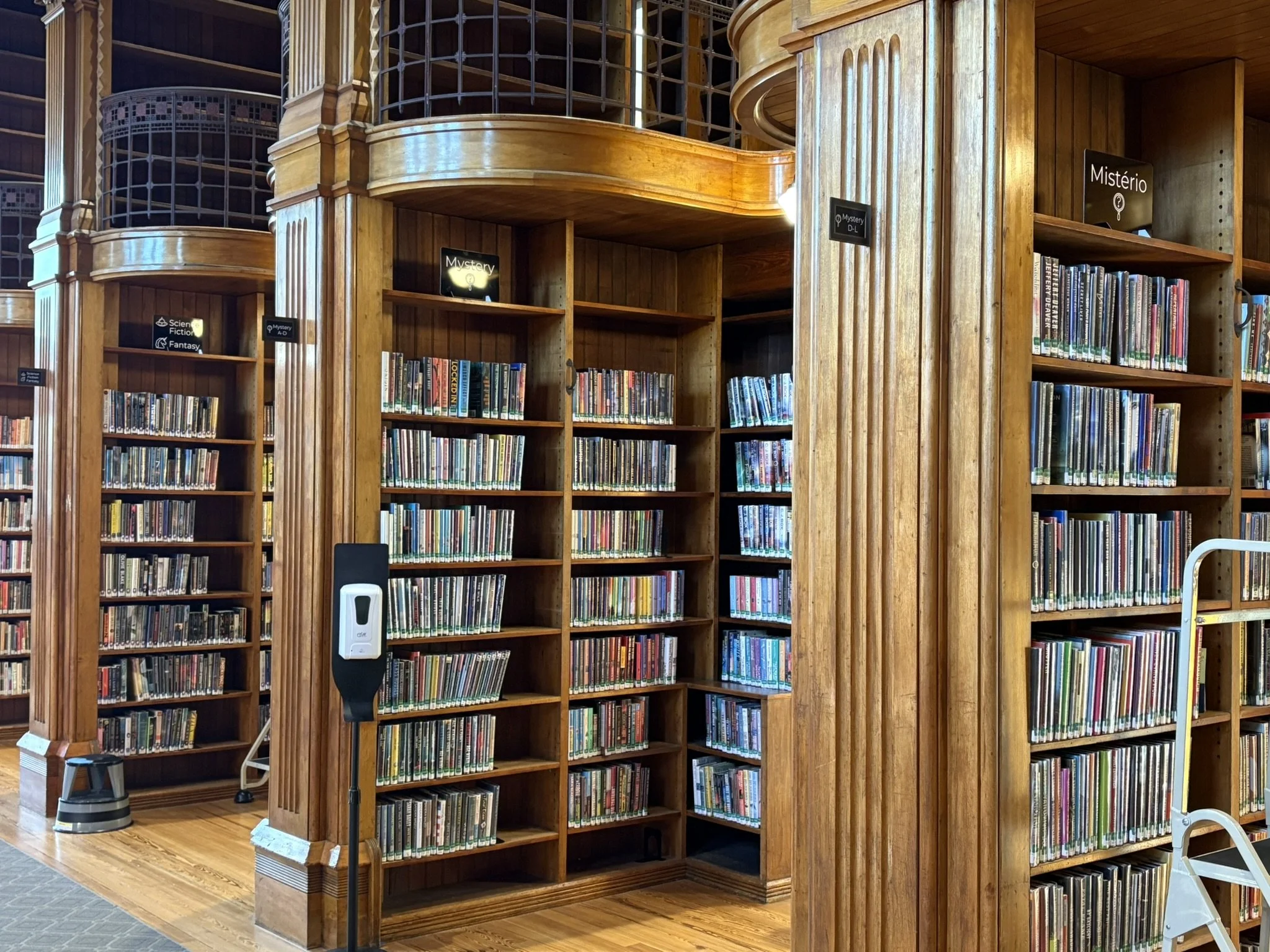
For the first time, WPL’s shelves were adjusted to a consistent height across the collection. Shelves were capped so patrons could reach the top and no titles were placed on the bottom, making the space more physically accessible to all patrons. Previously, duplicate copies were shelved separately. After weeding, remaining duplicates were integrated into regular shelf order where patrons could find them.
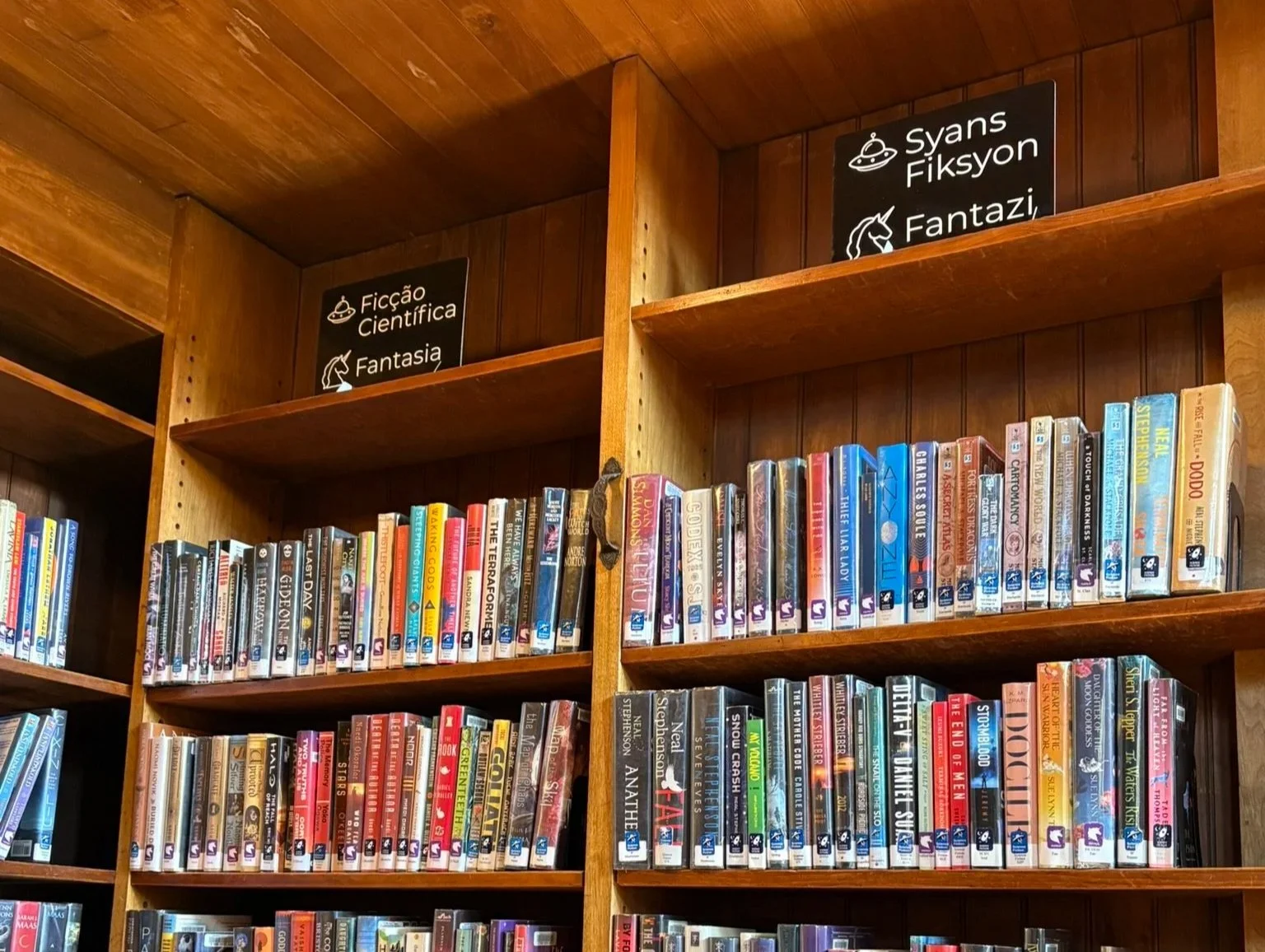
New signage was added in English, Spanish, Portuguese, and Haitian Creole to reflect the community’s linguistic diversity, and each genre section was clearly defined.
The response was immediate. Circulation staff heard regularly that titles were easier to find. Genre readers appreciated having dedicated sections. And staff stopped receiving questions on where duplicate titles were because patrons were finding them on their own.
FOR STAFF
The project also changed how WPL staff approached collection decisions. Having data behind every major decision — what to weed, what to replace, how to configure the space — meant that concerns could be addressed with evidence. That shared foundation gave the whole team a reason to get on board and made a big project feel more manageable. Staff reported greater confidence throughout the project, and that confidence didn’t disappear even when the project ended.
IQ TOOLS USED
Collection Maintenance — Report Builder
Collection Maintenance — Balance
Collection Maintenance — Shelving Allocation
Collection Diversity — Recommended DEI Titles & Forthcoming Diverse Titles